Cleveland State University Student of Distinction: Afhan Taha
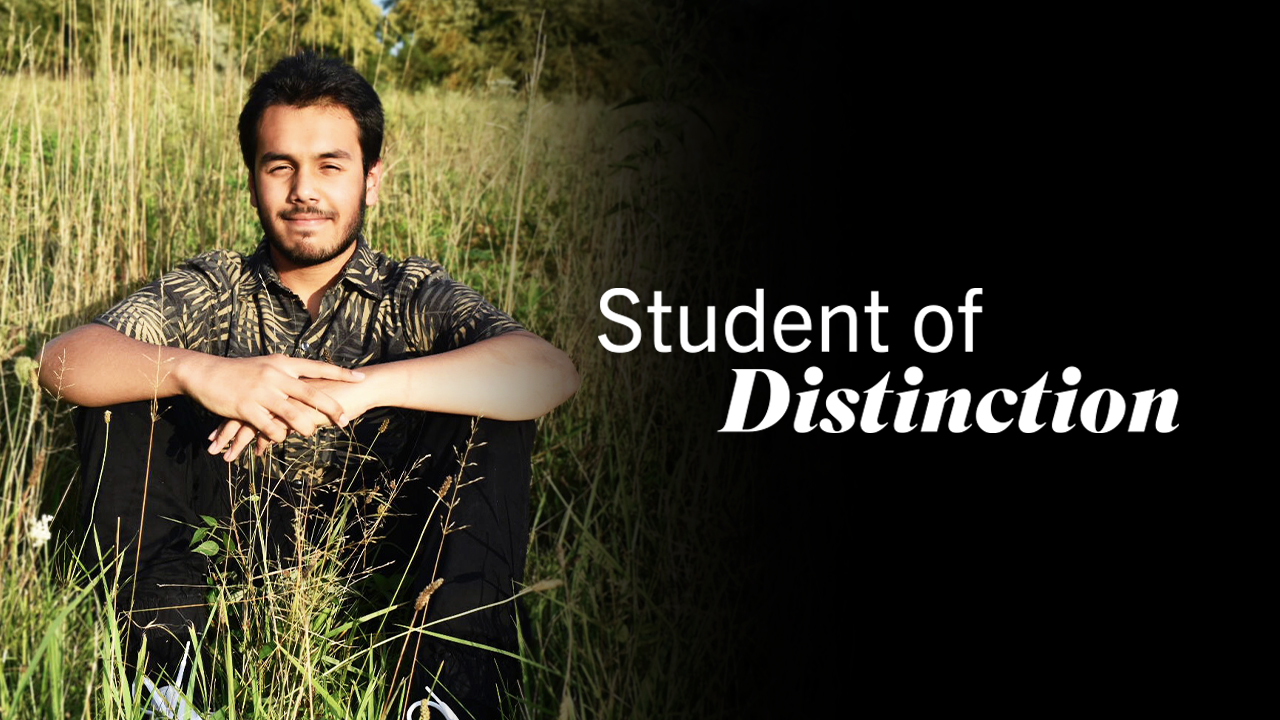
With Commencement approaching, CSU celebrates graduating students who have overcome obstacles, made significant achievements or are fulfilling Cleveland State University’s mission in or outside the classroom.
Today, we celebrate Afhan Taha, who is majoring in health sciences.
CSU: Have you had any significant internships/co-ops/careers while at CSU?
AT: One of my most meaningful professional experiences has been continuing working as a Clinical Research Assistant in the Department of Endocrinology at University Hospitals Cleveland Medical Center. Since November 2024, I have supported research examining how stress, self-management, and daily behaviors relate to glucose outcomes in people with Type 1 diabetes. Through this role, I have gained experience in clinical research operations, digital health tools, participant monitoring, and research data management. I have also contributed to two scientific conference abstracts and posters.
Alongside research, I have gained hands-on patient-care experience in urgent care at a private practice and in Mohs Surgery and dermatology at Cleveland Clinic. These experiences have allowed me to see healthcare from both the research and clinical perspectives and have strengthened my interest in finding ways to translate research into meaningful improvements in patient care.
I also participated in the 2026 University Hospitals IDEATOR innovation competition, where my team earned second place for our healthcare innovation concept. This experience further encouraged me to explore how research, technology, and interdisciplinary collaboration can address real-world healthcare challenges.
CSU: Was there a class, professor, or mentor who changed the way you think? What did they do?
AT: My coursework in health disparities with Dr. Kate Masely and Foundations of bioethics with Professor Sean McCormick has particularly influenced how I think about healthcare. It has encouraged me to look beyond a diagnosis or treatment and consider the broader circumstances that shape a person's health, including access to care, socioeconomic barriers, and the resources available to manage a condition outside a clinical setting.
This perspective has influenced how I approach both research and patient care. I have become increasingly interested in not only how we treat illness, but also how we design healthcare systems that help people maintain their health after leaving a clinical setting. It has helped shape my interest in combining clinical practice with research and innovation, particularly to improve care for underserved populations.
CSU: How has CSU inspired you for your future?
AT: Being in Cleveland, OH has helped me connect my interests in science, patient care, research, and leadership into a clearer vision for my future. Through my Health Sciences curriculum, I have developed a stronger understanding of the factors that influence health, while my experiences outside the classroom have shown me how that knowledge can be applied to real-world challenges.
My goal is to become a Physician Assistant while also contributing to healthcare innovation and clinical research with a passion for increasing healthcare access to underserved communities. I am particularly interested in improving what happens after patients receive acute care: helping them access follow-up resources, manage chronic conditions, and overcome barriers that can lead to preventable complications or repeat emergency visits.
My experiences have encouraged me to think beyond individual encounters and consider how we can improve healthcare delivery on a broader scale. I hope to carry that perspective into a career that combines direct patient care with evidence-based innovation and a commitment to serving underserved communities.
CSU: Do you have a career lined up, and how has CSU been instrumental in that process?
AT: As I prepare to graduate in December 2026 and plan my gap year(s), I am exploring full-time opportunities in healthcare research, clinical operations, and innovation that will allow me to continue building on my experiences while developing skills in healthcare improvement and implementation.
My long-term goal is to become a Physician Assistant and complement my clinical work with research and healthcare innovation. I want to help develop and evaluate approaches that make healthcare more accessible, effective, and responsive to patients' everyday needs.
My Health Sciences coursework has strengthened my understanding of health and health disparities, while serving as a College of Health senator and co-founding the American Red Cross Club have helped me develop leadership, collaboration, and community engagement skills. Combined with my research and patient-care experiences, these opportunities have helped me identify where my interests intersect and how I hope to contribute to healthcare in the future.
CSU: Looking back, what would you tell your first-year self?
AT: I would tell my first-year self not to feel pressured to have every step of the future figured out. Instead, focus on exploring your interests, pursuing opportunities that challenge you, and staying open to where different experiences might lead.
Some of the most valuable opportunities come from connecting seemingly different interests. Research, patient care, leadership, and innovation may appear to be separate paths, but I have learned that they can complement one another and create opportunities to make a broader impact.
I would also remind myself that growth happens outside the classroom, too. Taking initiative, building relationships, asking questions, and being willing to start something new can be just as formative as academic work. Most importantly, I would encourage myself to focus not only on what I hope to accomplish, but also on how I can use what I learn to serve others.
Congratulations, Afhan!