Office for Protected Rights
Contact Information
Office Hours
9 AM to 5 PM
Mailing Address
Cleveland State University
2121 Euclid Ave. AC 236
Cleveland, OH 44115-2214
Campus Location
Administration Center
Room 236
2300 Euclid Avenue
Phone: 216-687-2223
Fax: 216-687-9274
OPR@csuohio.edu
Evening and weekend urgent matters (text or call)
Phone: 216-369-9445
Service and Support Animals
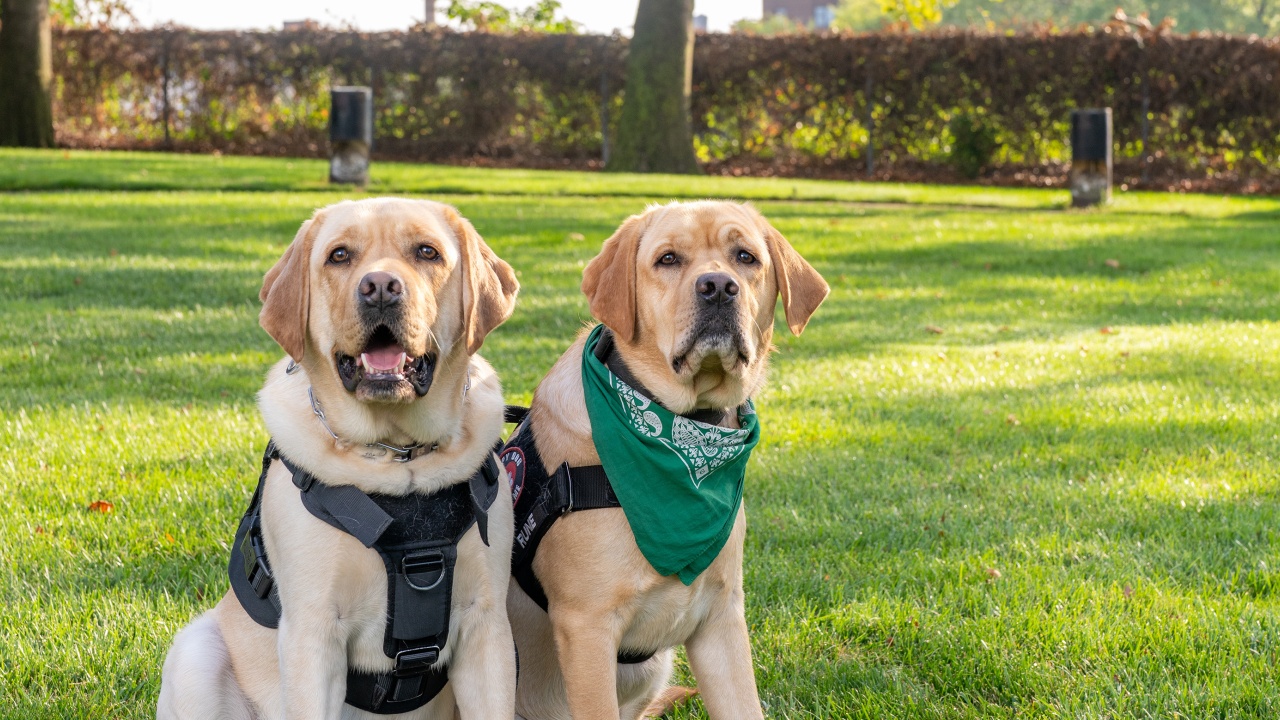
What You Need to Know
Do I have a "service animal"?
The Americans with Disabilities Act (ADA) defines a service animal as any guide dog, signal dog, or other animal individually trained to provide assistance to an individual with a disability. The critical part of the definition is the training. If the animal has been trained to do something specific for a person with a disability, the animal is a service animal under the ADA whether or not the animal is also licensed or certified.
Service animals perform some functions and tasks that an individual with a disability cannot perform. For example, persons with vision impairments may rely on guide dogs, which are a type of service animal. There are other types of service animals that assist persons with other kinds of disabilities in their day-to-day activities. Some examples include:
- Alerting persons with hearing impairments to sounds.
- Pulling wheelchairs or carrying and picking up things for persons with mobility impairments.
- Assisting persons with mobility impairments with balance.
- Interrupting a panic attack for a person with Post Traumatic Stress Disorder or other mental health condition.
A service animal is not a pet.
How is a support animal different from a service animal?
A support animal does not perform specific work or tasks for its handler. Instead, the presence of the support animal provides support, comfort, a sense of calm or wellbeing and benefit to the handler. In contrast, a service animal performs a specific task, whether that is fetching items or bumping the handler if the animal senses that the handler may be demonstrating destructive or compulsive behaviors, about to have a seizure or is in need of insulin.
Is there anything I should do to make my service animal “official” on campus?
No. An animal is an “official” service animal because of its training and the assistance it provides. Some, but not all, service animals wear special collars and harnesses. Some, but not all, are licensed, certified or have identification papers. If someone is uncertain whether your animal is a service animal, that person may ask you if your animal is a service animal required because of a disability. You probably don’t carry documentation about your animal’s training or your medical condition on you as you enter a restaurant, classroom or theater. For that reasons, it is unlawful for anyone to require, as a condition for providing service to you, that you produce evidence that your animal is a service animal.
How do I obtain permission from the University to bring my service animal to campus?
You do not need any special permission to bring your service animal to campus.
The law provides that the University must permit your service animal to accompany you at all times and to all campus locations.
What kind of work or tasks must a service animal do to fit within the definition of a service animal under the ADA?
The service animal must be trained and perform work that is directly related to your disability. Some examples of work or tasks include, but are not limited to:
- Assisting a person who is blind or has low vision with navigation and other tasks;
- Alerting a person who is deaf or hard of hearing to the presence of people or sounds;
- Providing non-violent protection or rescue work;
- Pulling a wheelchair;
- Assisting a person during a seizure;
- Alerting a person to the presence of allergens or an impending drop in blood sugar or a seizure;
- Retrieving items, such as medicine or the telephone;
- Providing physical support and assistance with balance and stability to a person with a mobility disability; and
- Helping a person with a psychiatric, mental health or neurological disability by preventing or interrupting impulsive, destructive, compulsive or anxious behaviors.
What are my responsibilities when I am on campus with my service animal?
- You are responsible for complying with local laws and regulations about animal rights and owner responsibilities.
- You are responsible for the costs of caring for your service animal and ensuring the animal’s wellbeing.
- You must be in full control of their service animals at all times.
Is there anything else I should know before I bring my service animal to campus?
- CSU encourages you to always have your service animal wear a leash or harness, and something that contains information identifying the animal’s name, that the animal is a service animal and your contact information.
What if I have questions about the use of my service animal on campus or someone objects to the presence of my service animal?
- You may contact the CSU Office for Disability Services (ODS) for questions or concerns about bringing your service animal to campus. ODS can be reached at 216-687-2015.
- You may contact the CSU Office for Protected Rights if you believe you are being treated unfairly, including being wrongfully challenged about or denied the right to be accompanied by your service animal, or experiencing discrimination or harassment based on your disability. OPR can be reached at OPR@csuohio.edu or 216-687-2223.
Contact Information
Office Hours
9 AM to 5 PM
Mailing Address
Cleveland State University
2121 Euclid Ave. AC 236
Cleveland, OH 44115-2214
Campus Location
Administration Center
Room 236
2300 Euclid Avenue
Phone: 216-687-2223
Fax: 216-687-9274
OPR@csuohio.edu
Evening and weekend urgent matters (text or call)
Phone: 216-369-9445